

loading...
Collaborative robots now play a larger role in industrial welding, especially at factories that handle frequent product changes, small production batches, or persistent labor shortages. Compared with traditional fixed automation, a collaborative robot offers a more compact and adaptable route to automated welding.
This article explains what to consider when selecting a collaborative robot for welding and examines why the Huayan Robotics Elfin-Pro is a strong option.
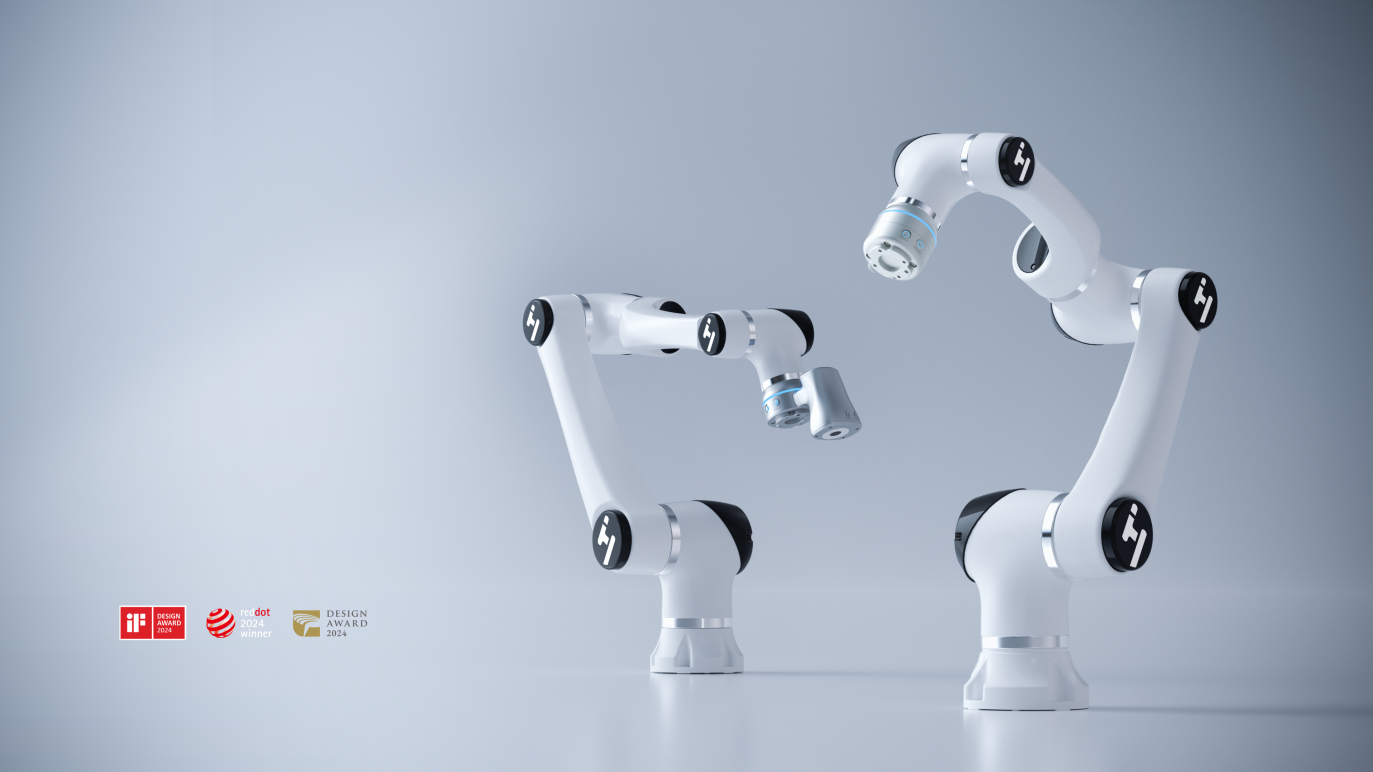
When selecting a cobot for welding, three factors deserve particular attention: repeatability, efficiency, and ease of use.
1. Repeatability
Repeatability measures how consistently a robot can return to a programmed position. This matters because a welding torch must follow the intended joint path at the correct angle and distance. Poor path consistency may contribute to uneven beads or variation between workpieces.
Manufacturers should compare repeatability across models and confirm that the figure applies to the required payload and working conditions. They should also test the proposed system with actual parts before a full deployment.
2. Efficiency
Efficiency affects cycle times, production output, and operating costs. A collaborative robot that moves slowly between welds extends the overall cycle time, regardless of how fast the actual welding process runs.
When selecting a collaborative robot, manufacturers should review its tool speed. A higher tool speed can reduce the time required to approach the workpiece, move between seams, and return to a safe position.
3. Ease of Use
Ease of use affects setup time, operator training, and the speed of product changeovers. Complex programming can reduce the value of automation, especially in high-mix, small-batch production.
Manufacturers should look for graphical programming, drag-to-teach functions, and remote-call interfaces. These features can simplify path creation and adjustment while helping the cobot connect with PLCs, welding sources, positioners, and other equipment.
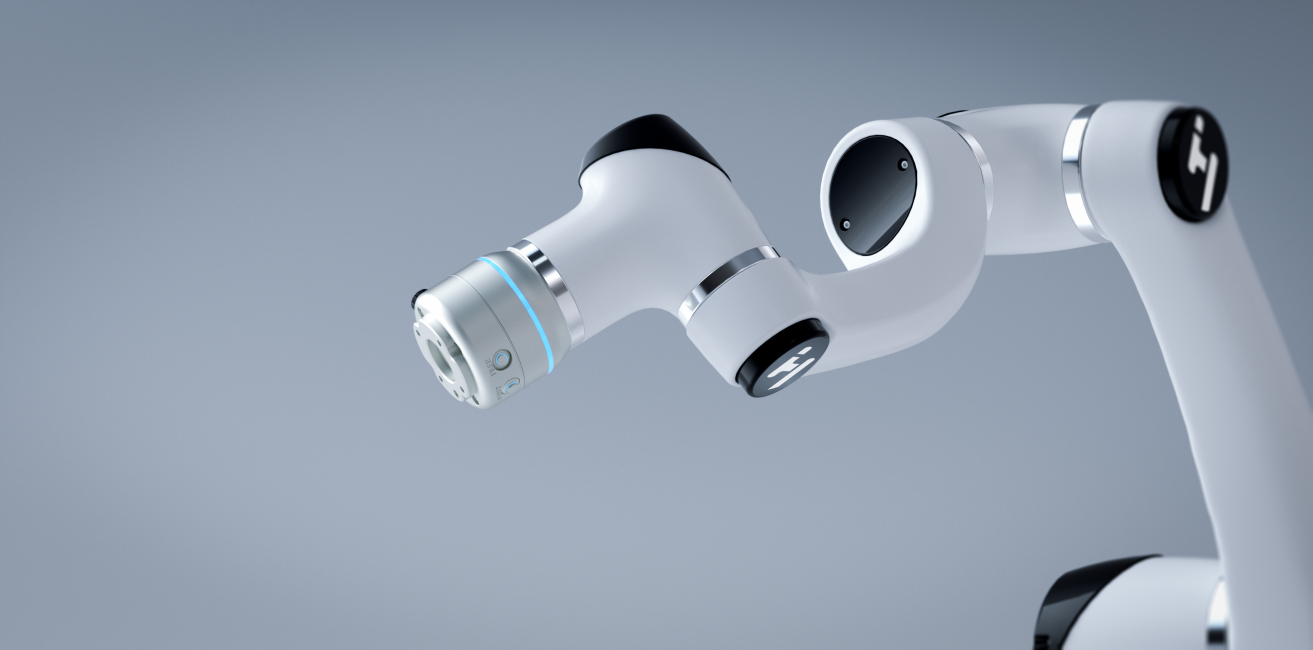
The Huayan Robotics Elfin-Pro series is one of the best collaborative robots for welding. It is a six-axis collaborative robot platform designed for flexible industrial automation, including welding. Its dual-joint modular structure, integrated end-force control, internal wiring, and IP66-rated robot arm make it suitable for welding cells that require flexible deployment, straightforward path setup, and coordination with auxiliary equipment.
The Elfin-Pro series offers payload capacities from 4 to 18 kg and reaches from 590 to 1,800 mm. Repeatability also ranges from ±0.02 to ±0.05 mm, while maximum tool speed ranges from 2 to 3 m/s. Manufacturers can select a model based on the combined weight of the torch and accessories, the required working envelope, the workpiece size, and the target path accuracy.
For ease of use and integration, Elfin-Pro supports graphical programming, a remote-call interface, TCP/IP, and Modbus TCP. PROFINET and EtherNet/IP are available as options.
The Elfin-Pro platform can be used for long-seam, circular, and flange welding. In one steel-structure welding application, the robot could be deployed and prepared for welding within approximately half an hour, supporting flexible production across small batches and multiple product types.
In another application, one of our partners introduced an E10L-Pro with a dual-positioner workstation for flange welding. The system supports drag-to-teach programming for linear and circular paths, integrates a Megmeet welding package and Welding Process Pack 3.0, and synchronizes four external axes for larger workpieces.
Huayan Robotics Elfin-Pro collaborative robots cover a broad range of payloads, reaches, speeds, and repeatability levels. Features such as integrated end-force control, graphical programming, drag-to-teach operation, industrial communication options, and external-axis coordination make the platform suitable for flexible welding automation. Contact Huayan Robotics to discuss your welding process and identify the Elfin-Pro model and workstation configuration best suited to your application.

