

loading...
Robot algorithms often receive much of the attention in robotics development. However, software alone cannot deliver accurate physical movement. Every command must ultimately be converted into controlled torque, speed, and position by the robot’s hardware.
The robot joint module plays a central role in this process. Its performance directly affects the robot’s performance, responsiveness, structural design, and reliability. This article explains what a robot joint module is, why manufacturers may benefit from using ready-made modules, where these modules are used, and how to select the right one.
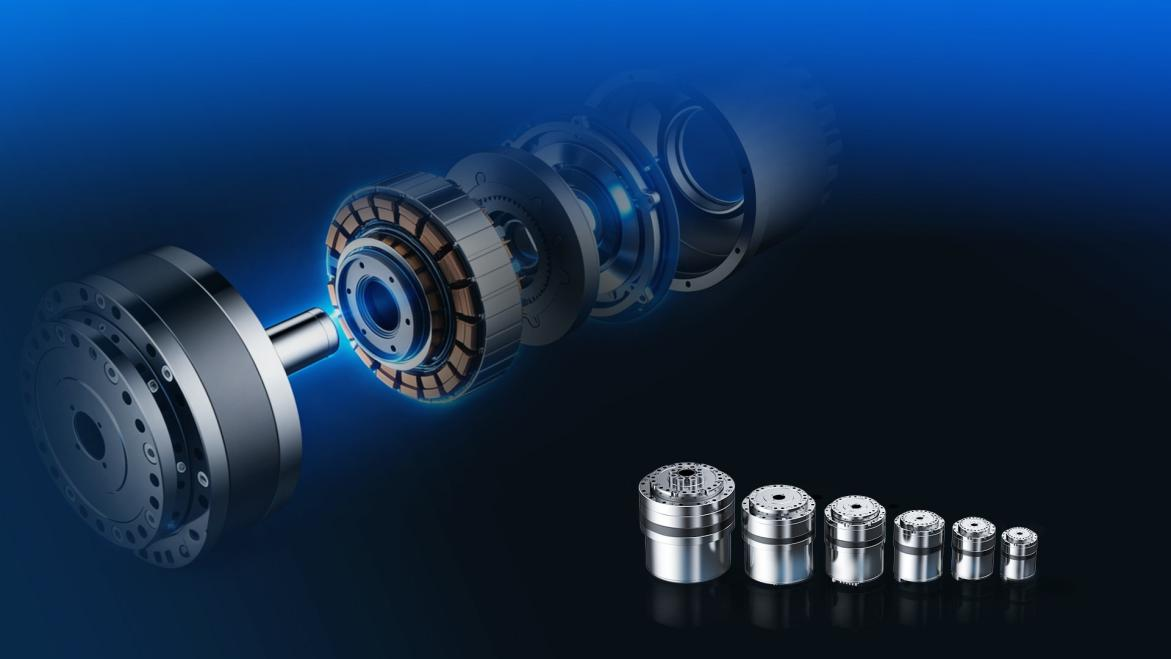
A robot joint module is an integrated actuator unit designed to move one or more axes of a robotic system. It connects two mechanical links and enables them to rotate relative to each other, functioning much like a shoulder, elbow, wrist, or knee. A typical robot joint module may integrate the following components:
Instead of purchasing the motor, reducer, encoder, brake, and driver separately and developing a joint in-house, manufacturers can adopt a ready-made joint module from a specialized supplier. This approach offers four main advantages.
Building a joint in-house can involve dozens of components from many different suppliers. A ready-made module reduces this to a single line item, which simplifies purchasing, inventory management, and quality control.
A commercially available joint module is often engineered as a compact unit, with the motor, reducer, and electronics arranged in an optimized structure. This is especially valuable in robots with limited installation space, such as humanoid arms and hands, where every millimeter counts.
Because the components are already matched, calibrated, and tested by the supplier, engineers do not need to spend a significant amount of time on mechanical alignment, wiring, and tuning. A ready-made module can usually be connected and commissioned much faster than a self-assembled joint.
Developing a joint in-house requires expertise in mechanics, electronics, and control. By adopting a ready-made module, development teams can reduce technical risk and shift their attention to system-level design and application software.

Humanoid robots use joint modules in their shoulders, elbows, wrists, hips, knees, and ankles. These applications require a careful balance of torque, weight, size, sensing, and compliant control.
A collaborative robot works alongside people, so it needs smooth motion, accurate force control, and a high level of safety. Joint modules with torque feedback and reliable braking support these requirements.
In assembly, handling, and inspection tasks, joint modules provide stable and repeatable motion. Their modular structure also makes maintenance easier, since a faulty joint can be replaced quickly to minimize downtime.
Exoskeletons must move in harmony with the human body. Compact, lightweight joint modules with good backdrivability help deliver natural assistance while keeping the wearer comfortable.
Choosing the right joint module depends on the specific demands of the application. The following criteria are among the most important.
Check the outer diameter, length, weight, and hollow shaft design. The module must fit within the available space, and cable routing through the center of the joint can greatly simplify the structure.
Evaluate both rated torque and peak torque. Rated torque determines continuous operation, while peak torque matters for acceleration and sudden loads. A safety margin should be included in the selection.
The output speed must match the required motion of the robot. Note that a higher reduction ratio increases torque but lowers speed, so the two parameters should be considered together.
Precision tasks require high repeatability, which depends on the quality of the reducer, the encoder resolution, and the control performance. Backlash and torsional stiffness also affect the final accuracy.
The module should support common protocols such as CAN, CANopen, or EtherCAT, so that it can integrate smoothly with the robot controller. Stable and fast communication is essential for multi-joint coordination.
Huayan Robotics has developed a Universal Humanoid Joint Module as a compact motion unit for humanoid robotic systems. It integrates a frameless torque motor, precision reducer, high-resolution encoder, high-sensitivity torque sensor, high-performance drive controller, and intelligent algorithms into a single module.
This highly integrated, ultra-lightweight module can help humanoid robot developers reduce component count, save structural space, and simplify joint-level development. Its combination of actuation, sensing, and control is designed to support precise movement, compliant interaction, and dependable operation.

The robot joint module is the foundation of reliable robot motion. By integrating key components into a single unit, it simplifies the BOM, saves space, shortens integration time, and lowers development complexity. When selecting a module, engineers should carefully evaluate form factor, torque, speed, repeatability, and communication to ensure that it fits the application. With the right joint module, robot developers can spend less time on hardware challenges and more time on the performance and intelligence that set their products apart.

