

loading...
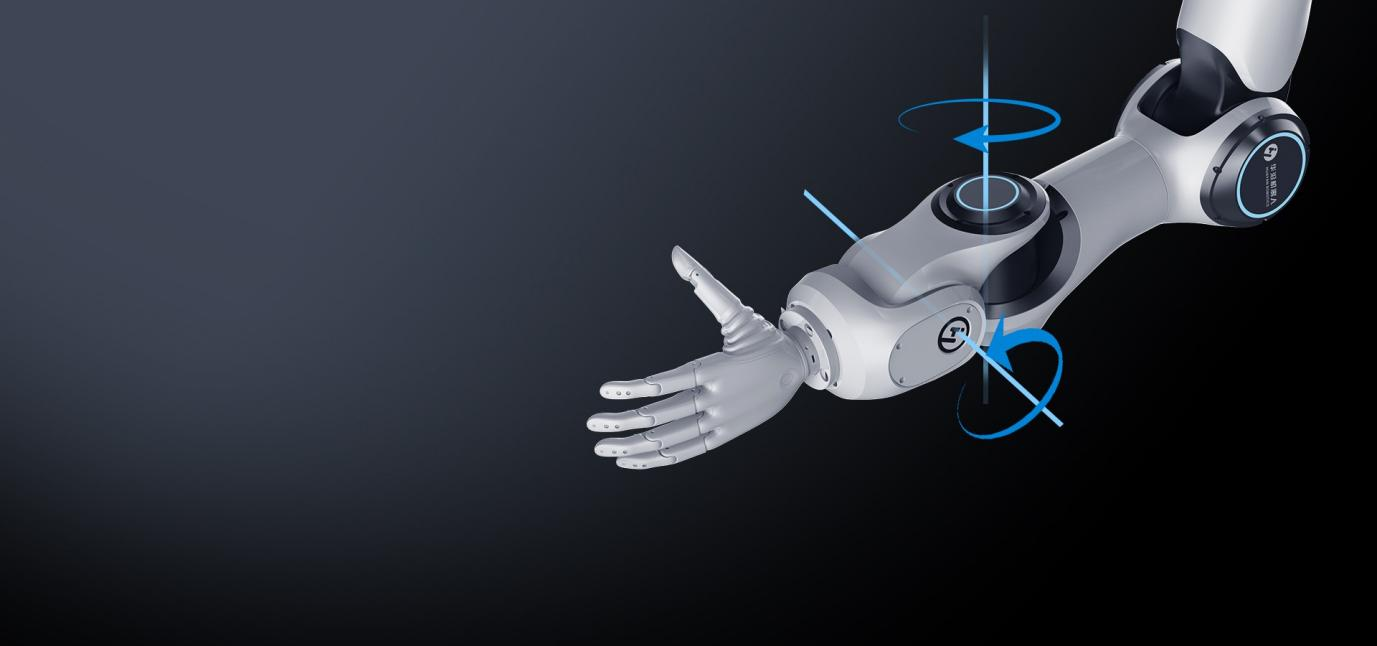
Before comparing robotic arms, robot manufacturers should clearly define what the robot needs to do and where it will operate, as these factors determine the priority of each selection criterion. For example, a mobile service robot may place greater emphasis on low weight, compact size, and compliant interaction, while a robot designed for precision assembly may require better positioning accuracy.
Once these priorities are clear, robot manufacturers can evaluate robotic arms against the requirements of the intended application and identify the most suitable options.
The arm’s weight and external dimensions affect how it can be installed and which platforms can carry it. A fixed base can generally support a heavier arm, while a mobile manipulator, quadruped robot, or humanoid robot must manage the arm’s effect on balance, structural load, energy consumption, and battery life. Robot manufacturers should consider both the total weight and how the mass is distributed when the arm extends or moves.
Degrees of freedom determine how many independent joint movements an arm can perform. A 6-DoF robotic arm can position and orient an end effector in three-dimensional space and is suitable for many structured tasks. A 7-DoF arm adds kinematic redundancy, allowing it to adjust its joint configuration while maintaining the end effector’s target position and orientation.
The required payload should be calculated from the total load at the end of the arm, not only the object being handled. The calculation should include the gripper or dexterous hand, cameras, sensors, adapters, cables, and the target object. Acceleration and arm posture can also affect practical load capacity. Selecting a model with a suitable operating margin helps maintain stable motion without adding unnecessary weight and cost.
Range includes both the arm’s maximum reach and its usable workspace. Robot manufacturers should test the arm in the actual or a representative operating environment to confirm that it can reach all required locations, maintain the correct end-effector orientation, and avoid interference with the robot body and surrounding structures.
Accuracy should be evaluated according to the task. Repeatability describes how consistently the arm can return to the same programmed position, while absolute positioning accuracy describes how closely it reaches a commanded position in physical space. Tasks based on taught points and repeated cycles may prioritize repeatability. Absolute accuracy becomes more important when the arm must execute coordinates generated by an external measurement system or move between calibrated workstations without local correction.
Force control combines force or torque sensing with control methods that allow the arm to respond compliantly to contact. It is especially important for insertion, surface following, tool operation, human interaction, and manipulation of fragile objects. It is also valuable in imitation learning, where a robot may need to capture demonstrated forces or reproduce actions that cannot be defined by position alone.
The intelligence of a robotic arm depends partly on how effectively it can connect with perception systems, planning algorithms, and AI models. Robot manufacturers should evaluate whether the arm supports real-time control, vision integration, sensor feedback, trajectory adjustment, and access to the data required by learning algorithms.
Integration covers the effort required to connect the arm with the robot body, controller, end effector, sensors, and software system. Support for ROS or ROS 2, an SDK, documented APIs, open communication protocols, and simulation models can shorten development time. Mechanical mounting, power connections, cable routing, gripper interfaces, and compatibility with cameras or dexterous hands should also be reviewed before final selection.
After evaluating the robotic arm itself, assess whether the supplier can support the complete product-development process. Review its manufacturing experience, production capacity, quality-control system, technical documentation, software maintenance, delivery capability, spare-part availability, and engineering support. The supplier should also be able to provide consistent mechanical interfaces and performance across production batches, while providing documented software compatibility, controlled version management, and clear upgrade paths.
This assessment is important because an arm that works in a prototype may not be suitable for commercial deployment. Limited production capacity, inconsistent product quality, incomplete documentation, or slow technical support can delay integration and force manufacturers to repeat validation. A capable supplier should support the project as it moves from initial development to prototype testing, pilot production, and scaled deployment.
Huayan Robotics, dedicated to the R&D, promotion, and application of intelligent collaborative robots, offers commercial 7-axis humanoid robotic arms for humanoid robots, quadruped robots, mobile manipulators, and other embodied AI platforms. The product lineup includes the Echo Series and HY Series.
The Echo Series includes the Echo 3, Echo 5, and Echo 15. These models use a coplanar cross-axis configuration that supports flexible movement, obstacle avoidance in confined spaces, and the execution of complex tasks. They provide rated payloads of 3 kg, 5 kg, and 15 kg, with corresponding reaches of 925 mm, 735mm, and 854 mm.
The HY Series includes the HY 3, HY 7, and HY 15. These models use a spatial cross-axis configuration that provides a larger workspace, reduced singularity risk, and higher structural rigidity. They offer rated payloads of 3.5 kg, 7 kg, and 15 kg, with corresponding reaches of 650 mm, 670 mm, and 813 mm.
All models feature high-precision force control across all joints, with a torque control accuracy of ≤0.02 N·m, a control bandwidth of ≥100 Hz, and end-effector contact-force accuracy of 0.1 N. These capabilities enable responsive, compliant interaction in contact-sensitive applications.
These arms are also integrated with a local AI server and natively compatible with ROS 2. They support edge decision-making functions such as detecting deviations, identifying anomalies, and adjusting trajectories in real time.
In addition, these humanoid robotic arms support an SDK, native ROS 2, open protocols, and EtherCAT communication. The arms provide RS485 and EtherCAT interfaces for connecting end effectors, and their minimum internal routing diameter of 15 mm accommodates data, power, and signal cables. A single compact controller can operate up to four arms simultaneously.
The right robotic arm depends on the complete embodied intelligence system. Define the tasks and operating environment first before evaluating robotic arm performance and supplier capabilities. For robot manufacturers and integrators, shortlist models using published specifications and make the final decision through system-level testing.

